Small apartment living presents a very specific decorating challenge: how do you make a space feel warm, personal, and beautiful when square footage is limited and you cannot make structural changes?
The answer, in almost every case, is textiles.
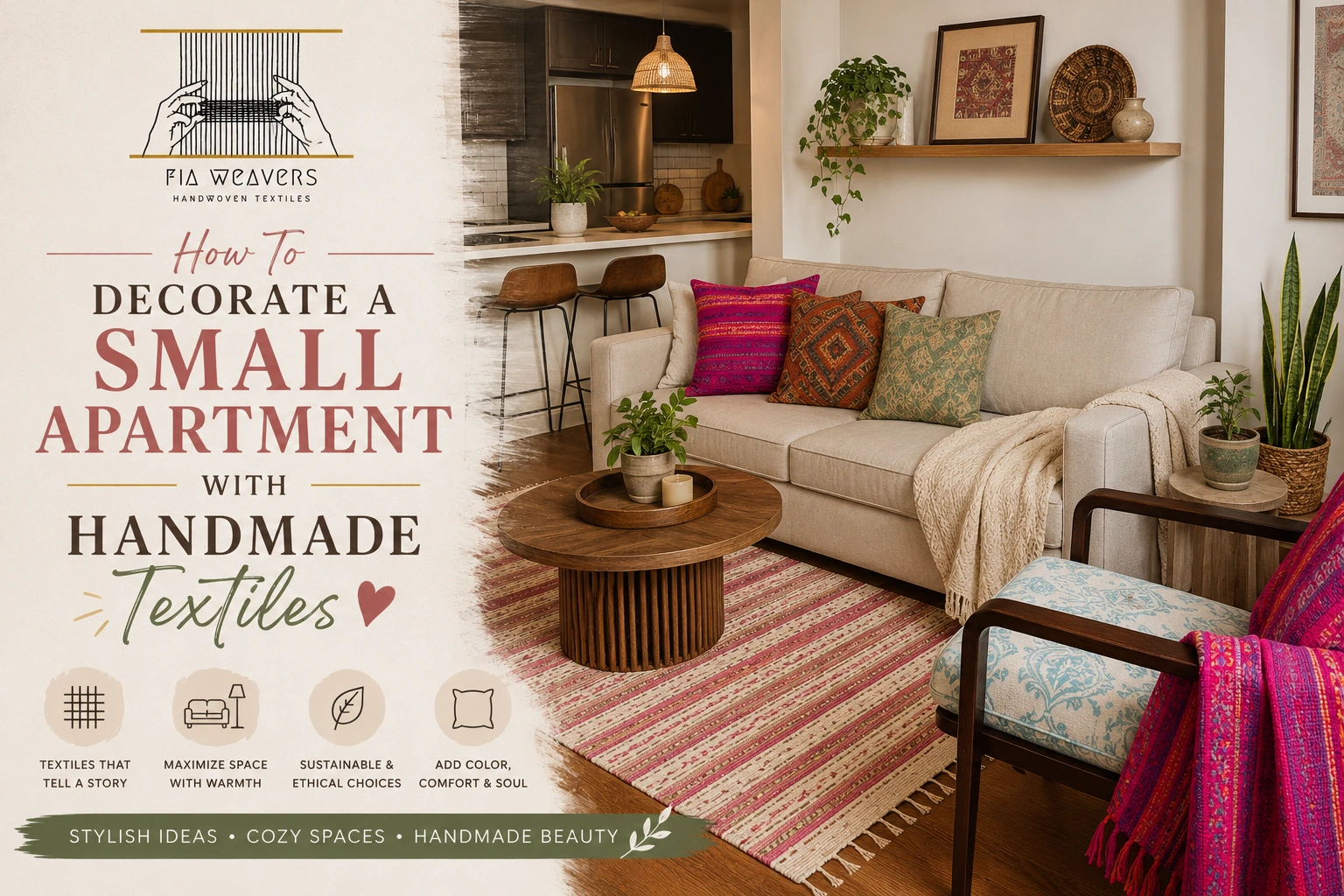
Handmade textiles like rugs, pillow covers, table runners, throws, are the most powerful decorating tools available to the apartment dweller, for a simple reason: they add warmth, color, and personality without taking up any floor space. A beautifully styled sofa, a carefully chosen area rug, a handmade table runner on the dining surface, these three changes alone can transform a generic rental apartment into a space that feels genuinely like yours.
This guide covers the best strategies for decorating a small apartment with handmade textiles and why this approach works better in compact spaces than any other.
Why Textiles Are Ideal For Small Apartments
In a small apartment, every decorating decision competes for floor space, wall space, and visual real estate. A large piece of furniture takes up actual square footage. A wall shelf requires hardware and wall damage. But a throw pillow cover, a woven area rug, or a handmade table runner, these add enormous decorating impact with essentially zero footprint.
Textiles also:
- Absorb sound, which is particularly valuable in hard-floored apartments
- Add warmth in both visual and physical temperature terms
- Create personality without permanence, easily swapped or removed when you move
- Photograph beautifully, making even a modest apartment look like a well-designed home on social media
The Apartment Area Rug: Your Single Most Impactful Choice
In a small apartment, particularly a studio or one-bedroom, the area rug is the most important decorating decision you will make. It defines the living area, warms a typically hard floor, and grounds the furniture arrangement in a way that makes the space feel designed rather than random.
Size guidance for apartments: Many apartment dwellers make the mistake of choosing a rug that is too small, thinking a smaller rug will take up less visual space. This is counterintuitive but wrong, a larger rug actually makes a small room feel bigger because it creates a unified floor plane rather than fragmenting the floor into rug and not-rug zones.
In a studio apartment living area, a minimum 2×6 rug is needed. An 4×6 will make the space feel significantly larger if the room dimensions allow.
Style guidance: In a small apartment, a flat-weave or low-pile handwoven rug in a warm neutral tone creates visual warmth without adding the visual bulk of a high-pile rug. Natural cotton or jute in a cream, sand, or warm greige tone keeps the floor plane light and spacious-feeling.
The Sofa: Where Textiles Do Their Best Work
In a studio or one-bedroom apartment, the sofa is often the largest and most important piece of furniture and it is the most powerful canvas for textile decoration.
Pillow styling for small apartments: Less is more here. Over-pillowing a small sofa makes the sofa look smaller and leaves no room for anyone to actually sit. Three to five pillow covers on a standard apartment sofa is the right range.
Choose your covers in the same general palette as your rug to create visual cohesion across the small space. A woven cotton cover in terracotta or warm cream that relates to the tones in your rug ties the room together without requiring any additional decorating investment.
The throw blanket: A single woven cotton or lightweight wool throw draped over the sofa arm adds warmth and casual style without taking up any space. In a small apartment, the throw also serves a practical function, apartments can be drafty, and a beautiful throw that you actually use every day is the best kind of decorating.
The Dining Area: Maximum Impact With A Table Runner
Most small apartments have a compact dining table, often a round two-seater or a small rectangular four-seater that also serves as a desk or work surface. A table runner transforms this multi-use surface into something that feels considered and special.
A handmade table runner in a natural linen or warm-toned cotton adds texture and warmth to a dining surface that would otherwise look purely functional. When the table is serving as a desk, the runner frames the workspace. When it is set for dinner, the runner forms the foundation of the tablescape.
For small apartment dining tables, a runner that does not quite reach the ends of the table (rather than draping over the edges) works particularly well, it adds visual interest without making the small table look dressed up beyond its means.
Using Textiles To Define Zones In A Studio Apartment
In a studio apartment, where one room must function as living room, bedroom, and sometimes workspace, textiles become a powerful zone-defining tool.
The rug as zone definition: A living room rug placed under the sofa and coffee table defines the living area as a distinct zone within the open studio floor plan. This visual boundary created entirely by a single rug, does more to create the sense of a “room within a room” than almost any other technique.
Pillow distinction between zones: If your studio has a sofa area and a bed area, using different pillow covers in each zone but within the same overall palette, reinforces the distinction between living and sleeping areas. The cohesion of palette keeps the whole space feeling unified. The variation in pillow styling creates the sense of different rooms.
What Not To Do: Common Textile Mistakes In Small Apartments
Do not use patterns that are too large for the space. A bold oversized pattern on a rug or pillow cover can overpower a small room. In small apartments, opt for subtle geometric weaves, texture-based patterns, or solid tones.
Do not use too many colors. In a small space, a restrained palette, two or three related tones across all textiles, makes the apartment feel coherent and calm. Too many competing colors fragment the space visually.
Do not skip the rug. Hard floors in small apartments look cold and echoey without a rug. Even a modest-sized natural fiber rug adds warmth and acoustic comfort that transforms the feel of the space.
Building Your Apartment Textile Foundation
The most effective approach is to invest in a few foundational handmade pieces first, then layer more affordable accents around them.
Start with: One handwoven area rug in a warm neutral that defines your living zone, and two handmade pillow covers for your sofa in complementary tones.
Then add: A table runner for your dining surface, a simple throw for the sofa arm, and gradually replace any existing accent pieces with natural fiber alternatives as budget allows.
At FIA Weavers, our pillow covers, area rugs, and table runners are designed to work together beautifully, creating the layered, cohesive textile foundation that turns any small apartment into a warm and genuinely personal home.