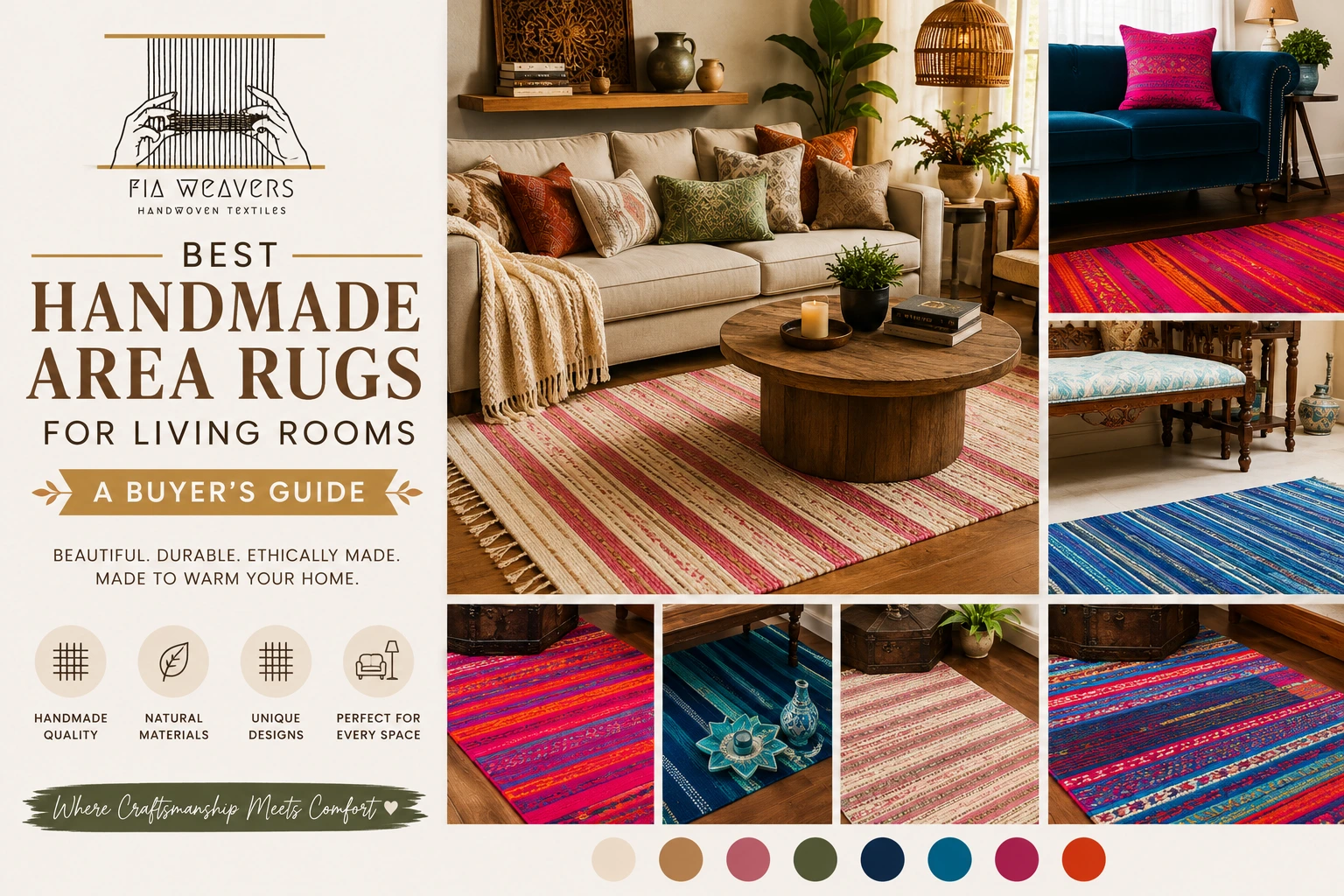
Best Handmade Area Rugs For Living Rooms: A Buyer’s Guide
Choosing a handmade area rug for your living room is one of the best investments you can make in your home. Unlike machine-made rugs, which are churned out by the thousands of automated looms, handmade rugs are crafted by skilled artisans, each one carrying the warmth, character, and subtle variation that only comes from being made by human hands.
But the handmade rug market can be overwhelming. There are different construction methods, different fiber types, different pile heights, and a wide range of price points, all of which affect how the rug will look in your living room and how long it will last.
This buyer’s guide cuts through the confusion. It covers everything you need to know to choose the best handmade area rug for your living room, from construction types and fiber choices to sizing, styling, and care.
Types Of Handmade Rugs: What The Differences Mean
Hand-knotted rugs are the most time-intensive and generally the most valuable form of handmade rug. Each individual knot is tied by hand onto the warp threads, a process that can take months for a single rug. Hand-knotted rugs tend to be extremely durable, can be reversible, and improve with age. They are found across Persian, Turkish, and Moroccan rug traditions.
Hand-woven flat weave rugs also called dhurrie or kilim rugs depending on origin, are made on a loom by interweaving weft threads through warp threads without a pile. The result is a flat, reversible rug with beautiful pattern possibility and a clean, modern look that works in contemporary and organic modern interiors. Flat weave rugs are generally lighter and easier to care for than pile rugs.
Hand-tufted rugs are made by punching loops of wool or cotton through a backing material and then cutting the loops to create a pile. This is faster than hand-knotting and generally results in a more affordable handmade option. The quality varies significantly depending on the backing material used.
Loomed natural fiber rugs, jute, sisal, seagrass, are woven on traditional looms using plant fibers. These rugs are durable, sustainable, and beautiful in their natural, organic simplicity. They are ideal as base rugs in layered arrangements or as the primary rug in a boho or organic modern living room.
Best Fiber Choices For Living Room Rugs
Wool is the gold standard of rug fiber. It is naturally resilient, soft underfoot, resistant to staining, and develops a beautiful patina with age. Wool rugs are ideal for high-traffic living rooms and for any home where long-term value matters.
Cotton is durable, easy to clean, softer than natural fibers like jute, and takes dye beautifully, allowing for richer, more precise color patterns. Handwoven cotton rugs have a beautiful flat texture that works well in both casual and more refined living room settings.
Jute is a natural plant fiber with a warm, golden-brown tone in its undyed state. Jute rugs have a distinctive organic texture and are among the most sustainable rug options available. They work best in lower-traffic areas and add an unmistakably natural character to any room.
Wool-cotton blends combine the durability and softness of wool with the cleanability and affordability of cotton, a practical choice for family living rooms that still want the quality of natural fiber.
How To Choose The Right Style For Your Living Room?
For a neutral or organic modern living room: Choose a flat-weave cotton or jute rug in a warm natural tone, undyed, sand, warm cream, or subtle geometric pattern in earthy colors. The organic texture of the weave does all the work without competing with the quiet palette of the room.
For a boho living room: A hand-woven rug with geometric, tribal, or traditional pattern in earthy tones, terracotta, rust, faded indigo, warm red, creates the kind of visual richness that defines the boho aesthetic. Layer it over a plain jute base rug for a fully realized boho look.
For a farmhouse living room: A flat-weave cotton rug in warm cream or soft grey with simple stripe or check pattern suits the casual warmth of farmhouse style. Natural materials are essential, synthetic rugs look immediately out of place in a well-executed farmhouse interior.
For a contemporary or modern living room: A low-pile hand-knotted rug with a geometric pattern in a neutral palette bridges the handmade quality with the clean lines of contemporary design. Avoid overtly traditional patterns, which can feel at odds with modern furniture lines.
Sizing Guide For Living Room Rugs
Getting the size right is as important as getting the style right, a beautiful rug in the wrong size will undermine the whole room.
Living Room Size
Recommended Rug Size
Small
2×6
Medium
3×5
Large
4×6
Always use the front-legs-on rule at minimum, all major furniture pieces should have their front two legs on the rug. In larger rooms, all legs on the rug is the ideal.
What To Look For In A Quality Handmade Rug?
Knot density (for knotted rugs): Higher knot density means finer detail and greater durability. Count the knots per square inch, anything above 80 KPSI is considered quality.
Backing material: For hand-tufted rugs, a cotton backing rather than a synthetic latex backing indicates higher quality and better long-term durability.
Fiber feel: Run your hand across the rug pile. Quality wool and cotton have a warmth and density that synthetic fibers cannot replicate. Scratchy, thin, or uniform-feeling pile indicates synthetic blending.
Color consistency: In genuine handmade rugs, slight color variations called abrash, are normal and desirable. They indicate natural dye processes and hand-production. Perfect, completely uniform color is a sign of machine production.
Weight: A quality handmade rug should feel substantial when lifted. Light, thin rugs tend to slide, wear quickly, and look flat on the floor.
Caring For Your Handmade Living Room Rug
Rotate the rug 180 degrees every 6–12 months to distribute wear evenly
Vacuum regularly but without the beater bar, which can damage natural fiber weaves
Spot clean stains immediately with cold water and a small amount of gentle soap
Have the rug professionally cleaned every 2–3 years depending on traffic
Always use a quality rug pad, this extends the life of the rug significantly and prevents slipping
Why Choose FIA Weavers?
At FIA Weavers, our handmade area rugs are crafted by skilled artisans using traditional weaving techniques and natural materials. Every rug in our collection is designed with the living room in mind, the right proportions, the right palette, and the kind of artisan quality that makes a room feel genuinely beautiful.
Our rugs are made to last for years, to age gracefully, and to anchor living rooms with the warmth and character that only handmade craftsmanship can provide. Explore our area rug collection and find the piece that belongs in your home.