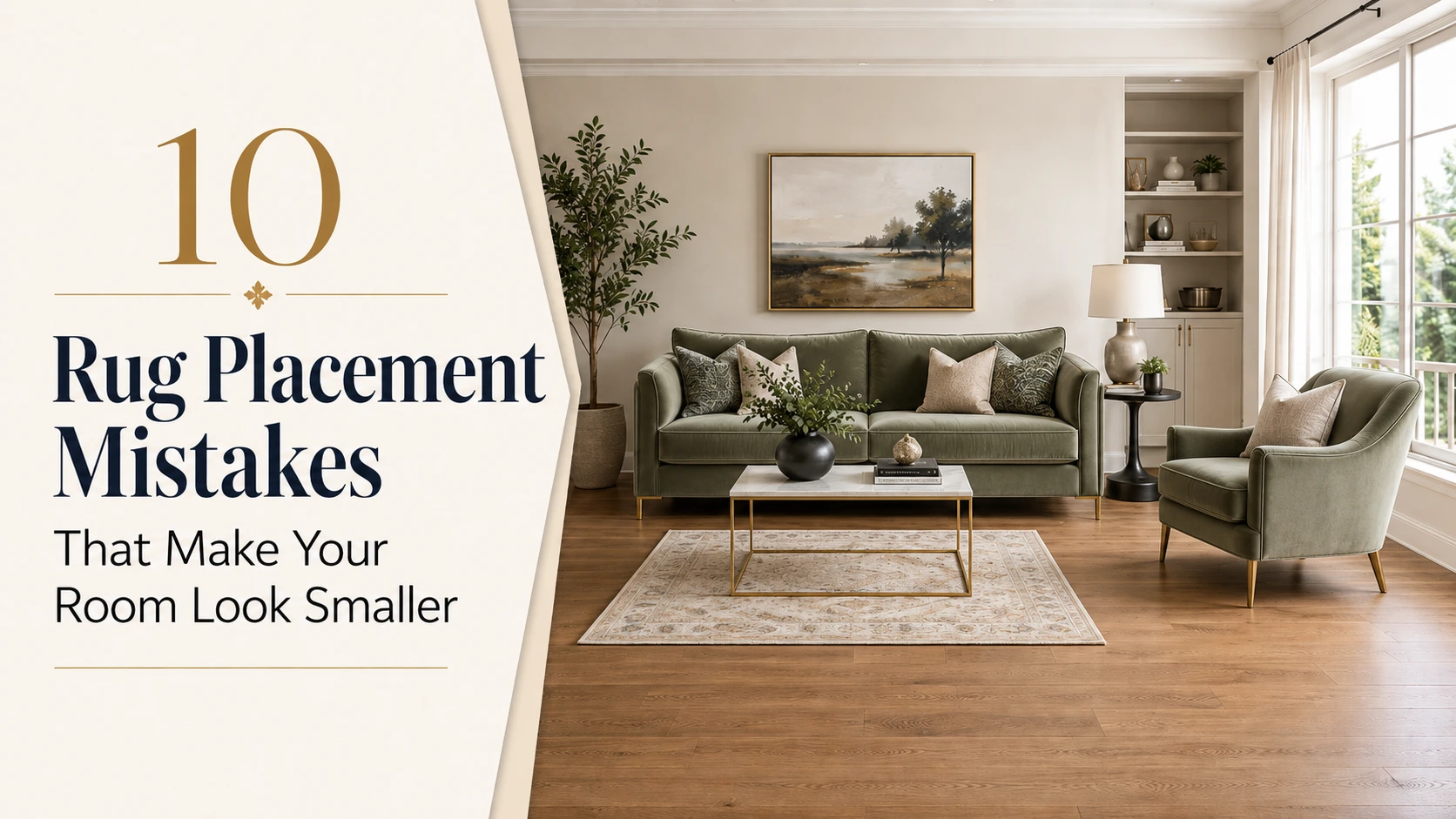
10 Rug Placement Mistakes That Make Your Room Look Smaller
A beautiful area rug in the wrong position can make even a large room feel cramped, chopped up, and visually confusing. Conversely, the right rug placed correctly can make a small room feel significantly more spacious, a living room feel more cohesive, and a bedroom feel more luxurious.
The frustrating thing is that rug placement mistakes are incredibly common — and most people do not know they are making them. If your room feels off and you cannot quite identify why, there is a reasonable chance one of these ten mistakes is the culprit.
Let us walk through each one, explain why it damages the space, and show you exactly how to fix it.
Mistake 1: The Rug Is Too Small
This is the single most widespread rug mistake in American homes. People underestimate the size they need, buy a rug that is too small, and end up with what interior designers call a “floating island” — a small rug sitting in the middle of a room, touching nothing, connecting nothing.
A rug that is too small makes a room feel fragmented and unanchored. It also makes the room feel smaller, because the eye sees the floor space around the rug as disconnected zones rather than a unified whole.
The fix: In a living room, your rug should be large enough for at least the front two legs of every piece of furniture in the seating arrangement to sit on it. For a standard living room, this usually means a minimum of 8×10 feet. For larger spaces, a 9×12 is often more appropriate. When in doubt, go bigger.
Mistake 2: The Rug Is Centered In The Room Instead Of Under The Furniture
Many people center their rug in the room geometrically — equidistant from every wall — without considering where the furniture actually sits. The result is a rug that is visually disconnected from the seating area it is meant to anchor.
The fix: Center the rug within the furniture grouping, not within the room. The rug should define and anchor the seating area. Pull it toward the sofa and chairs, not toward the walls.
Mistake 3: All Furniture Legs Are Off The Rug
The opposite of having front legs on the rug is having no legs on it at all — a rug pushed so far under the coffee table that the sofa and chairs float above it on bare floor. This arrangement makes everything feel disconnected.
The fix: Follow the “front legs on” rule at minimum. Ideally in a large living room, all furniture legs sit on the rug. If your rug is not large enough to achieve this, it is too small.
Mistake 4: The Rug Is Placed Parallel To The Wall When It Should Be Angled
In some rooms — particularly awkward rectangular spaces — placing a rug parallel to the walls reinforces the boxy, rigid feel of the room. A slight angle can introduce dynamism and visual flow.
The fix: In an angular or awkward room, try angling the rug 45 degrees to the walls. This is a bold design move that works particularly well in boho, eclectic, and organic modern interiors.
Mistake 5: Mismatched Rug Size In The Dining Room
In dining rooms, the most common mistake is a rug that is too small to fully contain the chairs when they are pulled out. Guests pull back their chair to sit down, the back legs slide off the rug, and the chair catches on the rug edge every time someone stands up.
The fix: In a dining room, the rug should extend at least 24 inches beyond every edge of the dining table. This ensures all chair legs remain on the rug whether the chairs are pushed in or pulled out.
Mistake 6: Wrong Rug Shape For The Room
A rectangular rug in a round breakfast nook, a round rug in a long narrow hallway — mismatched shape and space make both the room and the rug look wrong.
The fix: Match the general shape of the rug to the shape of the space or furniture grouping. Round rugs work beautifully under round tables and in square rooms. Rectangular rugs anchor rectangular seating arrangements and work in most standard living rooms. Runner rugs belong in hallways, entryways, and alongside beds.
Mistake 7: The Rug Is Pushed Against The Wall
Pushing a rug against a wall might seem like a way to use the full floor space, but it creates an awkward visual gap between the rug and the furniture — and makes the furniture look like it is floating in the middle of the room with no anchor.
The fix: Pull the rug away from the walls by at least 12–18 inches on the sides. There should be a consistent border of bare floor between the rug edge and the walls. This framing effect makes both the rug and the room look more intentional.
Mistake 8: Layering Rugs Without A Size Differential
Layered rugs are a beautiful design technique — but only when there is a significant size difference between the base rug and the accent rug placed on top. Two rugs of similar size layered together look accidental rather than designed.
The fix: When layering rugs, the base rug should be significantly larger — at least 50% bigger in area. A large jute or natural fiber rug as a base, with a smaller patterned or more decorative rug layered on top, is the classic well-executed approach.
Mistake 9: Using A High-Pile Rug Under A Dining Table
High-pile or shag rugs look incredible in living rooms and bedrooms. Under a dining table, they are a practical nightmare — food particles embed in the pile, chair legs sink and drag, and the rug deteriorates quickly.
The fix: In dining rooms, choose a flat-weave or low-pile rug. A hand-woven flat-weave rug is actually ideal for dining rooms because it lies perfectly flat, is easy to clean, and looks beautiful even with heavy chair traffic.
Mistake 10: Ignoring The Rug Pad
A rug without a pad shifts, bunches, and creates a trip hazard. It also wears out faster because without a pad, the rug fibers are compressed directly against a hard floor with every footstep.
The fix: Always use a quality rug pad. A good pad adds cushioning, prevents slipping, and extends the life of your rug significantly — particularly important when you have invested in a handmade area rug that is built to last for years.
Quick Reference: Rug Size Guidelines By Room
Room
Minimum Size
Ideal Size
Living Room (small)
5×8
8×10
Living Room (large)
8×10
9×12
Dining Room
8×10
9×12
Bedroom (Queen)
5×8
8×10
Bedroom (King)
8×10
9×12
Hallway
2×6 runner
2.5×8 runner
Choosing A Rug That Is Worth Getting Right
All ten of these placement tips matter most when you have a rug that is genuinely worth showing off. A handmade area rug — with its natural fiber, artisan weave, and organic warmth — deserves to be placed correctly and allowed to do the work it was designed to do.
At FIA Weavers, our handmade area rugs are crafted with the intention of anchoring beautiful rooms. Whether you are working with a large open-plan living space or a compact apartment bedroom, our rug collection includes sizes and styles designed to work with the placement principles above.
Get the placement right, choose a rug with genuine quality and character, and your room will feel completely transformed.