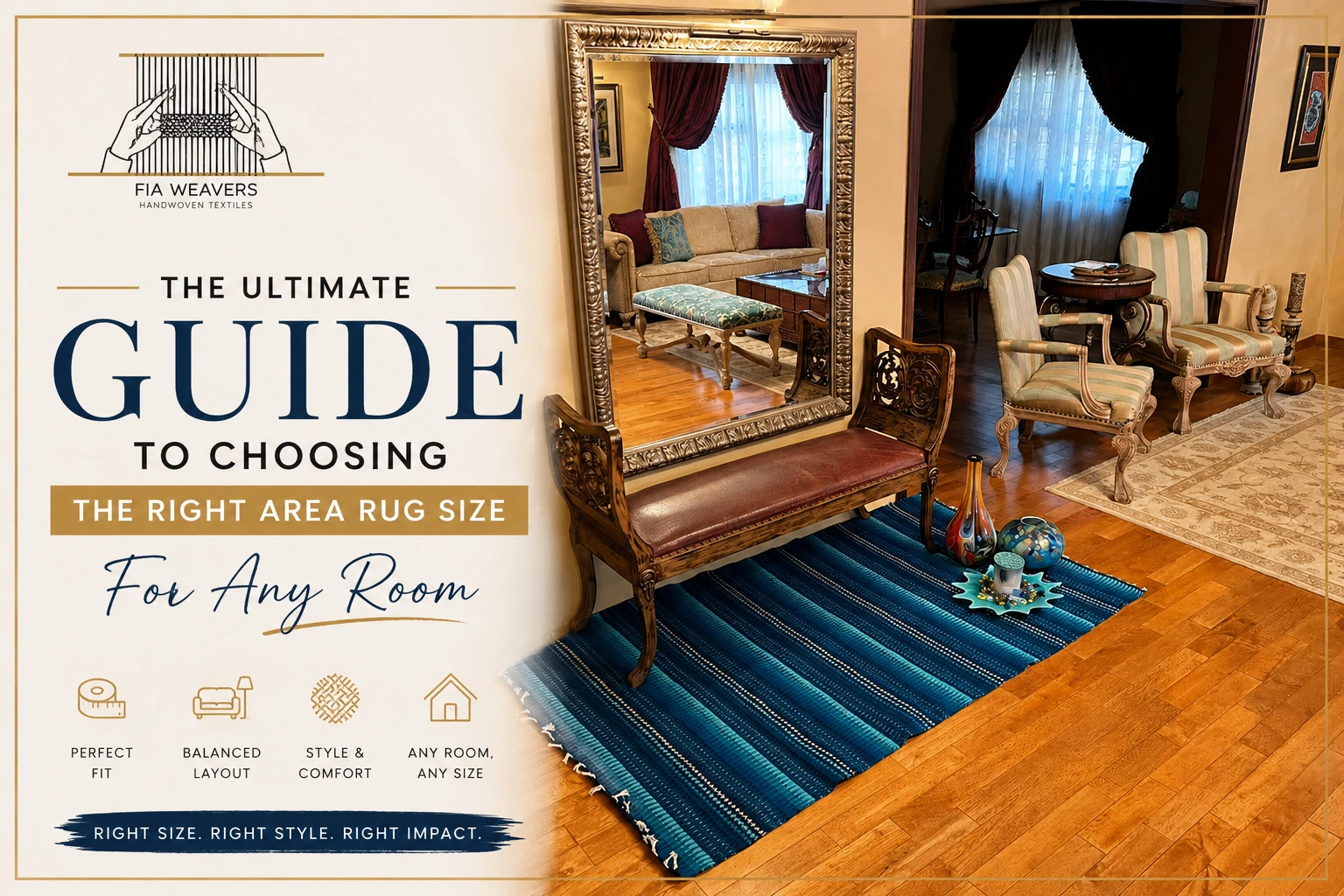
The Ultimate Guide To Choosing The Right Area Rug Size For Any Room
Choosing the wrong rug size is the most expensive interior design mistake you can make. A rug that is too small makes the room look unfinished. A rug that is too large can overwhelm a smaller space. And returning a large area rug, once you have unrolled it and realized the size is wrong, is a genuine logistical headache.
The good news is that choosing the right rug size is not guesswork. There are clear, proven principles that work in every room and every situation and this guide covers all of them, including a room-by-room size reference, measurement instructions, and the nuances that most rug guides skip over.
The Master Principle: Rugs Define Zones
Before getting into specific sizes, the most important thing to understand about handmade area rugs sizing is that a rug’s job is to define a zone. In a living room, the rug defines the seating area. In a dining room, it defines the dining zone. In a bedroom, it frames the sleeping area.
When a rug is the right size, it creates a clear visual boundary that makes the zone feel intentional and composed. When it is too small, the zone looks fragmented. When it is too large, the boundary disappears and the room loses its sense of order.
Every sizing decision below is guided by this master principle: the rug should clearly and generously define the zone it is anchoring.
Step 1: Always Measure Before You Shop
Before looking at any rug, take these measurements and write them down:
The dimensions of the room (length × width)
The dimensions of the furniture grouping the rug will anchor (for a living room, measure the seating area from sofa back to coffee table front and side to side)
The distance from each wall to the nearest piece of furniture
With these three measurements, you can accurately determine the right rug size and avoid the most common error: choosing based on how a rug looks rolled up in a store rather than how it will look on your floor.
Pro tip: Use painter’s tape to mark out potential rug dimensions on your floor before buying. This is the single most effective technique for visualizing rug size.
Living Room Rug Size Guide
The living room is where rug sizing decisions have the most visible impact and where the most mistakes are made.
The front-legs-on rule: At minimum, the front two legs of every major piece of upholstered furniture (sofa, chairs) should sit on the rug. This connects the furniture grouping visually and makes the seating area feel anchored.
The all-legs-on rule: In larger living rooms, all four legs of every piece of furniture sit on the rug. This creates maximum cohesion and works best with a 9×12 or larger rug.
Living room size guide:
Room Size
Recommended Rug Size
Small living room (under 12×14 ft)
5×8 minimum, 8×10 ideal
Medium living room (12×14 to 14×18 ft)
8×10 minimum, 9×12 ideal
Large living room (over 14×18 ft)
9×12 minimum, 10×14 ideal
Open-plan living/dining
Separate rugs for each zone
The border rule: Leave 12–18 inches of bare floor between the rug edge and the wall. This framing effect makes the rug look like a deliberate design element rather than an attempted wall-to-wall carpet.
Dining Room Rug Size Guide
Dining room rug sizing has one rule above all others: the rug must accommodate the chairs when they are pulled back from the table.
The 24-inch rule: The rug should extend at least 24 inches beyond each side of the dining table. This ensures all chair legs remain on the rug whether the chairs are tucked in or pulled back.
Dining room size guide:
Table Size
Recommended Rug Size
4-seat table (36×48 in)
8×10
6-seat table (36×72 in)
9×12
8-seat table (42×84 in)
10×14
Round 4-seat (48 in diameter)
8×10 minimum
Shape matching: Round dining tables pair beautifully with round rugs. Rectangular tables work with rectangular rugs. Square tables can use either.
Bedroom Rug Size Guide
The bedroom rug serves a different primary purpose than living and dining room rugs: it is the surface your feet land on when you get out of bed. This functional consideration drives most bedroom rug sizing decisions.
The stepping-on-softness rule: The rug should extend far enough beyond the bed that when you step out from either side, your feet land on the rug rather than the bare floor.
Bedroom placement options:
Option 1 (most common): Rug extends two-thirds from the foot of the bed, with the bed’s head end on bare floor or low-pile rug. The rug should extend at least 18–24 inches beyond each side of the bed.
Option 2 (most luxurious): A large rug extends fully under the bed and beyond on all sides. This requires a 9×12 for a Queen bed and a 10×14 for a King.
Option 3 (apartment-friendly): Two runners placed alongside each side of the bed — one per side, instead of a single large rug. Cost-effective and proportionally appropriate for smaller bedrooms.
Bedroom size guide:
Bed Size
Recommended Rug Size
Twin
5×8
Full/Double
6×9
Queen
8×10
King
9×12 or 10×14
Hallway And Entryway Runner Guide
Runners should leave 4–6 inches of floor visible on each side, not run fully wall to wall, which makes them look like carpet rather than a design element.
Length: A hallway runner should leave approximately 24 inches of bare floor at each end of the hallway, framing the runner as a deliberate placement.
Standard runner sizes: 2×8, 2.5×8, 2.5×10, 2.5×12
Special Situations
Open-plan spaces: Use separate rugs to define separate zones, one rug under the living room seating area, a separate rug under the dining area. The rugs should not touch but can share a color palette for visual cohesion.
Under a coffee table only: If budget constraints mean you must go smaller, at minimum the entire coffee table should sit on the rug. This is the absolute minimum for visual coherence, not ideal, but functional.
Layered rugs: The base rug should be generously sized per the guidelines above. The layered accent rug on top can be whatever size creates the most interesting visual composition, typically about 50–60% of the base rug’s dimensions.
Investing In The Right Rug
Once you know the right size, the quality and character of the rug itself becomes the decision. A handmade area rug — crafted from natural fiber with artisan weave patterns, brings warmth, depth, and longevity that mass-produced rugs cannot match. Given that the rug is the largest single textile investment in a room, choosing a piece with genuine quality and character is worth the investment.
At FIA Weavers, our handmade area rugs are available in the sizes most commonly needed for US living rooms, dining rooms, and bedrooms, all crafted by skilled artisans using natural materials. Use the sizing guide above to determine your size, then explore our collection to find the piece that brings your room to life.